

Democrac(z)y at Gunpoint: The Tyranny of the Free.
As the world wrestles with the fragility of globalization, Africa finds herself at a crucial crossroads, one filled with opportunity, yet accompanied by existential questions. Among the most pressing: Do the political systems we have inherited truly resonate with our values and cultures, and are they setting us up for success in today’s world, if at all they ever did in the past? Or are they simply frameworks imposed upon us, presented as universal ideals yet practiced with selective conviction?
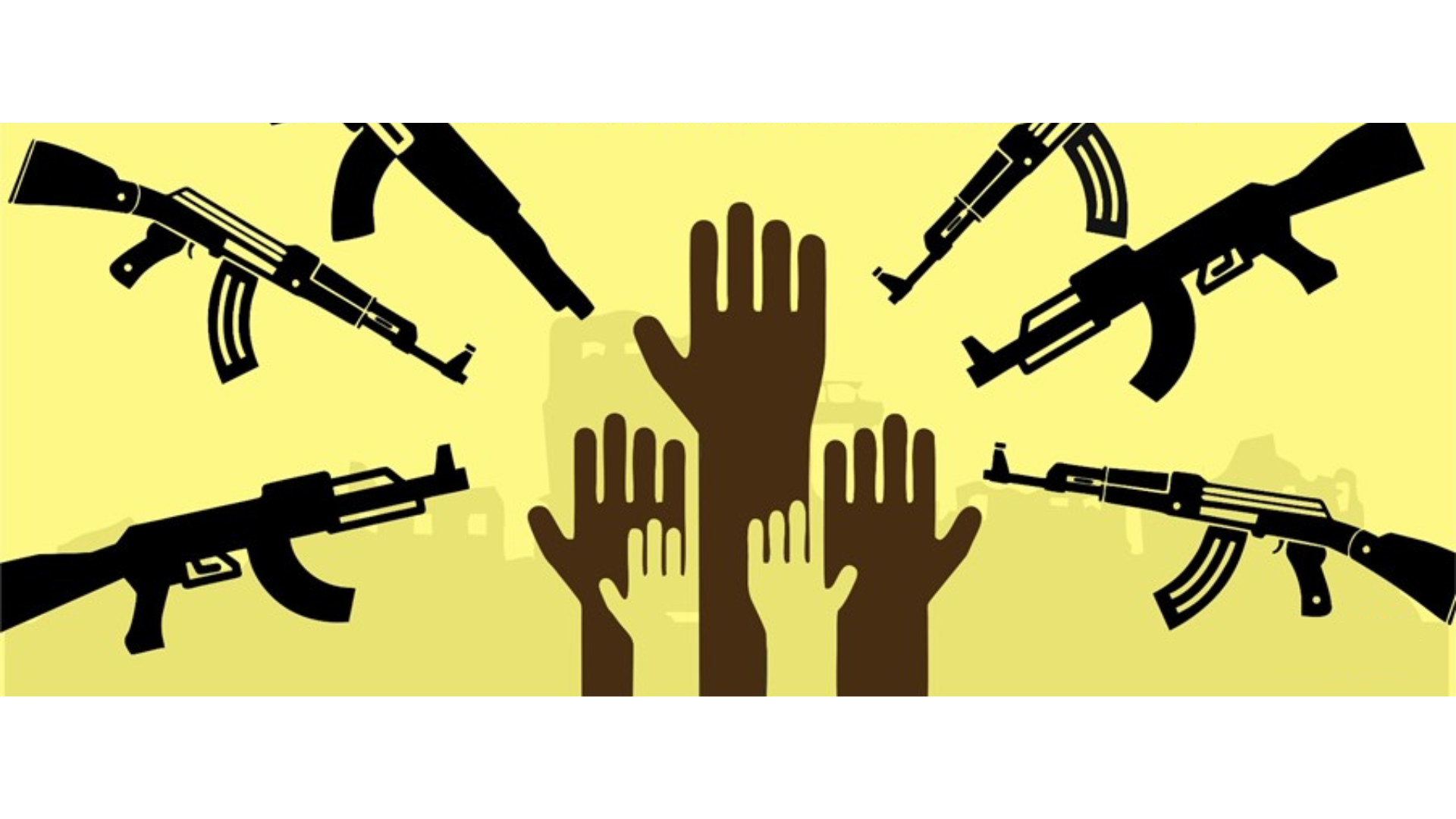
At the heart of this reflection is what I call “The Tyranny of the Free.” It describes a paradox where the ideals of democracy—freedom, choice, and self-determination are often promoted with an authoritarian fervour, undermining the very essence of what they claim to uphold. This makes me wonder even further if democracy at gunpoint is truly democracy? Can a system designed to be consent-based ever truly flourish when exported through military force, political pressure, or economic manipulation?
I deeply admire Nelson Mandela’s vision of “a democratic and free society in which all persons live together in harmony and with equal opportunities.” But the lived reality tells a different story. The same nations that profess to defend democracy are often the first to deploy troops (and selectively), enforce sanctions, or dictate policy when others dare to define freedom differently. Libya serves as a chilling example. Once one of Africa’s most prosperous nations, it was plunged into chaos by foreign intervention in 2011, in the guise of liberating it. The results have been anything but liberating.
This contradiction extends beyond politics into the realm of economics. Take, for instance, the Structural Adjustment Programs (SAPs) imposed on African countries by global financial institutions in the 1980s and 1990s. Marketed as paths to economic freedom, these programs frequently decimated local industries, slashed public services, and fostered external dependency. As Thomas Sankara once put it, they were “a cleverly managed reconquest of Africa,” making countries dependent rather than independent. This highlights how outside definitions of freedom can sometimes become subtle and deliberate ways of controlling nations.
But despite these constraints, the continent has not been passive. I draw immense inspiration from the boldness of countries experimenting with governance systems that reflect their own realities. Ethiopia’s developmental state, Rwanda’s pragmatic governance, Senegal’s civic tech innovations, and Burkina Faso’s recent moves to nationalize key economic resources are not signs of resistance to democracy but affirmations of a deeper democratic spirit: the courage to self-define. To be clear, these models are not flawless. But their merit lies in the principle, not the perfection. They represent what genuine freedom looks like: the liberty to try, to err, to adapt, and to build governance systems that are locally rooted and future-facing.
And yet, these attempts at self-determination are often dismissed or condemned by the international community. Any deviation from the prescribed democratic script is branded illegitimate, corrupt, or undemocratic. This is the tyranny of the free, the idea that only one version of freedom is acceptable, and all others must be corrected, contained, or condemned. Here lies the paradox of democracy: a system that should embrace pluralism often demands conformity. But shouldn’t real democracy make room for different paths, not penalize them?
Maybe our goal should not be to democratize Africa, but to Africanize democracy. Or perhaps even more radically: maybe democracy as it exists today, heavily individualistic, often adversarial, and largely transactional, is not the only or best model for African societies with their own rich traditions of consensus, community leadership, and intergenerational governance.
Let me be clear: I am not suggesting that democracy is inherently better or worse than other systems. Nor am I calling for authoritarianism. What I am advocating for is a liberated imagination. One that allows us to ask, honestly and without fear: What systems of governance truly serve us? What might it look like to blend African indigenous political philosophies with modern statecraft, creating something entirely new, uniquely ours?
Because ultimately, freedom is not about imitation. It is about imagination. The tyranny of the free arises when we forget that true liberty must include the right to redefine, to diverge, and to dream differently. Only then can we claim real freedom. Only then can we speak of democracy, not as something borrowed, but as something born.

